
AdSense Responsive Ads: How Smart Sizing Works (2026)
In December 2013 Google released “smart sizing” for AdSense: one piece of code that detected the space available and served an ad to fit, even when you rotated your phone. We called it the best responsive ad design AdSense had produced, and predicted it would become the default. It did. Here’s how AdSense responsive ads work in 2026 and how to get the most from them.
Quick answer: AdSense responsive display ads automatically adjust their size and format to the width of the space and the visitor’s screen. Create one under Ads > By ad unit > Display ads, keep the size set to Responsive, and paste the code into a container that has a defined width. The code uses data-ad-format="auto" and data-full-width-responsive="true" so ads can fill the screen width on phones.
Table of Contents
How smart sizing changed AdSense
AdSense’s first responsive ad units in mid-2013 relied on CSS media queries you wrote yourself, and the ad didn’t change if a visitor rotated their phone. Smart sizing let Google’s code measure the container and pick the best size automatically, including on rotation. Google also added sizes like 700×100, 400×200 and 160×240 for flexible layouts.

How to add AdSense responsive ads
- In AdSense, go to Ads > By ad unit and choose Display ads.
- Name the unit, leave the size as Responsive and choose Square, Horizontal or Vertical shape preference.
- Copy the code and paste it where you want the ad. Load
adsbygoogle.jsonly once per page if you use several units. - Make sure the parent element has a width; ads can’t size themselves inside a zero-width or floating container.
Tips to get better results
- Limit height if needed: AdSense lets you restrict how tall responsive ads can be on mobile in the ad unit settings or with CSS.
- Avoid overflow: don’t place responsive ads inside narrow sidebars that collapse on phones.
- Consider Auto ads: let Google place ads automatically, then fine-tune with ad load settings.
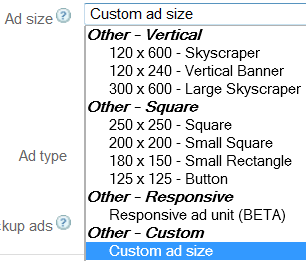
- Use fixed sizes only for special slots, such as a 320×100 mobile banner or custom ad sizes.
- Watch page speed: lazy-load ads below the fold.
Your theme should be responsive too; that’s no longer optional for any site.
FAQ
Are responsive AdSense ads better than fixed sizes?
For most mobile-friendly sites, yes. They adapt to each screen and can show more ad formats, which increases competition.
Why is my responsive ad not showing?
Common causes are a container with no width, ad blockers, a new site still under review, or placing the code inside hidden elements.
Can I control the size of responsive ads?
Partly: choose the shape preference, limit height on mobile, or set the container’s size with CSS.
Stuck on a gift? Try our free Gift Idea GeneratorIdeas for anyone by age, job, interests and budget, with Amazon.com and Amazon.in linksFind gifts →Didn’t find what you were looking for? Tell us in a line.

$4.99Free when you subscribe
Get 100 tech terms explained in plain English
8-page PDF on AI, coding, slang and SEO + one tech email a week.
Don’t want emails? Buy the PDF for $4.99 (opens in a new tab) (external site)
Sent by email. Unsubscribe anytime. See our privacy policy.




This still works, right?
Do you know of a plugin that will allow you to automatically add the responsive ad unit into the middle of a wordpress article? I know of quick adsense but I don’t think it works with the Responsive ad unit… would be great if you could help me!
WordPress plugins which add adsense codes anywhere in the html code based on location have text boxes to add code. It should be easy to add code there.
As i see it, very smart post.Through this post we can learn about google AdSense.
Well, I guess this would be a pleasing news to advertisers and publishers because its likely to help in the increase of conversion rate from mobile devices.
If we are to get the most from responsive themes and apps, it makes sense that marketers also get the most from responsive Google Adsense ads.
I wouldn’t recommend using the code since it uses CSS based media queries that may not always be the right approach to determine the available ad space on your web pages.
Thanks for this awesome article about new adsense options. I never forgot to check the new adsize.. thanks for the info….