Picasa: 5 Most Useful Features and What to Use Now (2026)
Picasa was Google’s free photo organizer for Windows and Mac, and for years it was one of the best tools around for sorting, finding and backing up a big picture collection. This article looks back at the five Picasa features we found most useful, explains what happened to Picasa, and shows which apps do the same jobs today.
Quick answer: Google retired Picasa in 2016 and moved its online side, Picasa Web Albums, to Google Photos. The desktop features people loved (duplicate finding, folder-based organizing, face grouping and backup tracking) now live in apps such as Google Photos, Apple Photos, digiKam and XnView MP. If you still have old Picasa folders on a disk, your original photos are ordinary files you can open in any of them.
Table of Contents
What happened to Picasa?
In February 2016 Google announced that it would stop supporting the Picasa desktop app and would focus on Google Photos instead. Picasa Web Albums was replaced by Google Photos, and the leftover Google Album Archive, where old Picasa web albums could still be viewed, was closed in July 2023. The desktop program is no longer updated, so it is best treated as a piece of history rather than something to install today.
That said, the ideas behind Picasa still matter. Here are the five features that made it so handy, with the modern way to get each one.
The 5 most useful Picasa features (and what to use now)
1. No duplicates
Photo libraries fill up with copies: the same picture saved twice under different names, or extra versions kept by other photo managers when you edit an image. Picasa had an experimental tool that showed all pictures it found to be identical, whether or not they had the same file name. Running it once cleared about 3GB of space with a single click, a job that would have taken hours by hand.
Today: digiKam, a free open-source photo manager for Windows, Mac and Linux, can search your collection for duplicate and similar images. Apple Photos on recent versions of macOS and iOS also gathers duplicates into a Duplicates album so you can merge them.
2. Organizing photos in real folders
Picasa did not lock pictures inside its own library. When you moved a picture from one folder to another in Picasa, it really moved on your computer. Seeing related pictures grouped together made it much easier to spot the ones that belonged somewhere else.
Today: digiKam and XnView MP both work directly with the folders on your drive, so what you see in the app is what you have on disk. This is the closest thing to the Picasa way of working.
3. Search by color

An experimental search option let you filter pictures by their main color, such as green, red, yellow, orange, blue, purple or black and white. If you needed a green landscape for a nature-themed blog post, a couple of clicks brought up every mostly-green photo you owned.
Today: Google Photos and Apple Photos both let you search your library by what is in the picture, such as “beach”, “mountains” or “dog”, which covers most of the reasons people used color search.
4. Show your face
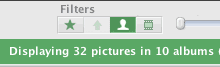
Picasa could show only the pictures that contained faces, across every folder, with one click. Picasa Web Albums later added face tagging, so it could group pictures by who was in them. Finding a good shot of yourself or a friend no longer meant hunting through dozens of folders.
Today: face grouping is standard. Google Photos groups similar faces (you can turn this on or off in its settings), Apple Photos has a People album, and digiKam has face detection and recognition that runs on your own computer.
5. Backup help
It is easy to lose pictures, not just by misplacing them but through crashes and forgetting which ones were already backed up. Picasa kept track of which files had been backed up and which had not, through its Back Up Pictures tool, so you never had to guess.
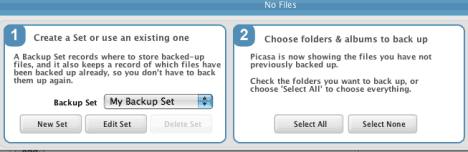
Today: cloud backup does this automatically. Google Photos and iCloud Photos upload new pictures from your phone as you take them. For a local copy, keep a second external drive and copy your photo folders to it regularly. If you use Google Photos, Google Takeout lets you download a full copy of your library, and it is worth setting up the Google Inactive Account Manager and 2-step verification so your photos stay safe.
Picasa alternatives at a glance
- Google Photos: cloud backup, search by content and face groups on Android, iPhone and the web.
- Apple Photos: built into Mac, iPhone and iPad, with a People album and a Duplicates album.
- digiKam: free and open source, folder-based, with duplicate search and face recognition on your own PC.
- XnView MP: fast free viewer and organizer that browses your folders directly.
FAQ
Is Picasa still available?
No. Google stopped supporting the Picasa desktop app in 2016, and the Google Album Archive that showed old Picasa web albums closed in July 2023.
What replaced Picasa?
Google Photos replaced Picasa Web Albums. For desktop organizing, digiKam and XnView MP are the closest free alternatives.
Are my old Picasa photos lost?
Pictures stored in folders on your computer are normal image files and are not affected. Photos you uploaded to Picasa Web Albums were moved to Google Photos.
Can I find duplicate photos without Picasa?
Yes. digiKam can search for duplicate and similar images, and Apple Photos collects duplicates in its own album.
Originally written by guest author Christine Buske, who wrote Google how-to guides at GoogleTutor.com. Updated for 2026 by QuickOnlineTips.
Get our free weekly email: new tech guides and tools, no spam.
New and updated tech guides, a free tool worth bookmarking and one useful pick, once a week. No spam, unsubscribe anytime.
One email a week. Unsubscribe anytime. See our privacy policy.