
Free Private Domain Registration: Who Offers It in 2026
When Google Domains opened in the US in January 2015, its biggest perk for us was free private domain registration. We were paying GoDaddy $7.99 a year per domain for privacy through Domains By Proxy, on top of about $12 for a .com. Google Domains is gone now (its customers moved to Squarespace in 2023), but our prediction came true: free WHOIS privacy is now standard at most good registrars.
Quick answer: Free private domain registration (WHOIS privacy) hides your name, address, phone and email from public domain lookups. Most major registrars now include it free, including Cloudflare, Porkbun, Namecheap and Squarespace Domains. Some country domains (like .in or .us) have their own rules, and since GDPR many registrars redact personal details by default.
Table of Contents
What is private domain registration?
Every domain has public registration records (WHOIS, now often RDAP). Without privacy, anyone can see the owner’s name, address, phone and email. That invites spam, scam calls and fake “domain renewal” letters. Privacy replaces your details with the registrar’s or a proxy service’s contact information.
Our 2015 view of Google Domains
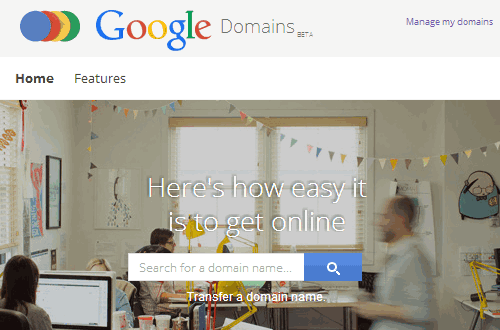
Google Domains offered free privacy, up to 100 email forwarding addresses, Google nameservers and many new extensions such as .guru, .today and .tips. With 10 domains, free privacy alone would have saved us about $80 a year. We expected other registrars to follow, and most did.
What happened to Google Domains
Google sold its domain business to Squarespace in 2023, and Google Domains customers were moved to Squarespace Domains. If you still have old Google Domains settings, check your domain’s DNS, email forwarding and renewal details in your Squarespace account.
Registrars with free WHOIS privacy
- Cloudflare Registrar: at-cost pricing and free redaction.
- Porkbun: free WHOIS privacy and SSL.
- Namecheap: free privacy protection for eligible domains.
- Squarespace Domains: free privacy for supported extensions.
Check each registrar’s renewal prices, not just the first-year deal, and whether privacy is available for the extension you want.
Protect your domain beyond privacy
- Lock your domain to prevent unauthorised transfers.
- Turn on auto-renew and keep your contact email working.
- Use two-factor authentication on your registrar account.
- Ignore “domain expiry” letters from companies you don’t use.
Even big names slip up: read how someone bought Google.com for $12.
FAQ
Is WHOIS privacy free?
At most major registrars, yes. Some still charge, so check before buying.
Can I add privacy to an existing domain?
Usually yes, in your registrar’s domain settings, or by transferring to a registrar that includes it.
Why isn’t privacy available for my domain?
Some country-code domains don’t allow it or have their own rules.
Get our free weekly email: new tech guides and tools, no spam.
New and updated tech guides, a free tool worth bookmarking and one useful pick, once a week. No spam, unsubscribe anytime.
One email a week. Unsubscribe anytime. See our privacy policy.



is it available in the india ? If yes, then please share the link to register the private domain. Thanks for sharing this important thing.
Its available in US only now.
may i can get in us so please share with me link to registraion the private domain
Hi karina.., Its available in US only now , tell admin if i wrong
But only Google can give Free Domain Registrations.