
What Comes After Terabyte? Data Storage Units from KB to Quettabyte
Back in 2005, when a 60 GB hard disk felt huge, we asked what comes after the gigabyte. Today a 2 TB drive is ordinary, phones hold a terabyte and cloud plans go far beyond that, so the question has moved up a step: what comes after terabyte? Here is the full list of data storage units, from kilobyte to quettabyte, with the real sizes and why your 1 TB drive shows less than 1,000 GB.
Quick answer: After the terabyte (TB) comes the petabyte (PB), which is 1,000 terabytes. Then come the exabyte (EB), zettabyte (ZB), yottabyte (YB), ronnabyte (RB) and quettabyte (QB), each 1,000 times bigger than the one before. Ronna and quetta were added to the official SI prefixes in 2022.
Table of Contents
What comes after terabyte: data storage units in order
| Unit | Symbol | Bytes (decimal) | Equals |
|---|---|---|---|
| Byte | B | 1 | 8 bits |
| Kilobyte | KB | 103 (1,000) | 1,000 bytes |
| Megabyte | MB | 106 | 1,000 KB |
| Gigabyte | GB | 109 | 1,000 MB |
| Terabyte | TB | 1012 | 1,000 GB |
| Petabyte | PB | 1015 | 1,000 TB |
| Exabyte | EB | 1018 | 1,000 PB |
| Zettabyte | ZB | 1021 | 1,000 EB |
| Yottabyte | YB | 1024 | 1,000 ZB |
| Ronnabyte | RB | 1027 | 1,000 YB |
| Quettabyte | QB | 1030 | 1,000 RB |
The prefixes come from the International System of Units (SI). The official SI prefix list runs from kilo up to quetta. Ronna (1027) and quetta (1030) were adopted in 2022, the first new prefixes since zetta and yotta in 1991.
How big is a petabyte, exabyte or zettabyte?
- Petabyte (PB): 1,000 TB, or a million gigabytes. Big companies, research labs and video platforms measure their storage in petabytes.
- Exabyte (EB): 1,000 PB. Large cloud providers and global internet traffic are measured in exabytes.
- Zettabyte (ZB): 1,000 EB, a billion terabytes. Estimates of all the data created in the world each year are given in zettabytes.
- Yottabyte (YB) and beyond: no single system holds this much data today; these units exist mainly so scientists and engineers have names ready for the future.
What about brontobyte and geopbyte?
In our 2005 post we listed a “brontobyte” after the yottabyte, as many websites did then. Brontobyte (and the even bigger “geopbyte”) were never official. When new prefixes were finally needed, the standards bodies chose ronna and quetta instead, so the official name for 1027 bytes is the ronnabyte.
1,000 or 1,024? Decimal vs binary units
Computers count in binary, so for years a kilobyte was often taken to mean 1,024 bytes (210), a megabyte 1,024 KB and so on. To end the confusion, the IEC introduced separate binary prefixes in 1998, as explained by NIST:
| Binary unit | Symbol | Bytes | Compared with decimal |
|---|---|---|---|
| Kibibyte | KiB | 1,024 | 2.4% more than a KB |
| Mebibyte | MiB | 1,048,576 | 4.9% more than a MB |
| Gibibyte | GiB | 1,073,741,824 | 7.4% more than a GB |
| Tebibyte | TiB | 1,099,511,627,776 | 10% more than a TB |
| Pebibyte | PiB | 250 | 12.6% more than a PB |
Why a 1 TB drive shows only 931 GB
Drive makers use decimal units, so a 1 TB drive holds 1,000,000,000,000 bytes. Windows divides by 1,024 three times but still labels the result “GB”, so it shows about 931 GB. Nothing is missing; it is the same number of bytes measured two ways. macOS has used decimal units since 2009, so a Mac shows the same drive as about 1 TB. A small part of the space is also used by the file system when you format the drive; see our guide to formatting a USB flash drive.
Bits vs bytes
A byte is 8 bits. Storage is measured in bytes (capital B), while internet speeds are usually given in bits per second (small b), such as 100 Mbps. That is why a 100 Mbps connection downloads at most about 12.5 megabytes per second.
Quick conversions
- 1 TB = 1,000 GB = 1,000,000 MB (decimal)
- 1 PB = 1,000 TB = 1,000,000 GB
- 1 TiB = 1,024 GiB
- 1 TB is about 0.909 TiB
To work with binary and hexadecimal values yourself, try our free number base converter. To see what is filling your drive, here is how to see folder sizes in Windows 11.
FAQ
What comes after terabyte?
The petabyte. 1 PB equals 1,000 TB.
What is the largest unit of data storage?
The quettabyte (QB), 1030 bytes, is the largest official unit since the SI added quetta in 2022.
Is a brontobyte real?
No. It was an informal name that never became official; the official unit for 1027 bytes is the ronnabyte.
How many gigabytes are in a terabyte?
1,000 GB, as drive makers count. In binary units, 1 tebibyte (TiB) equals 1,024 gibibytes (GiB), and a 1 TB drive shows as about 931 GB in Windows.
Is a TB bigger than a GB?
Yes. A terabyte is 1,000 times bigger than a gigabyte.
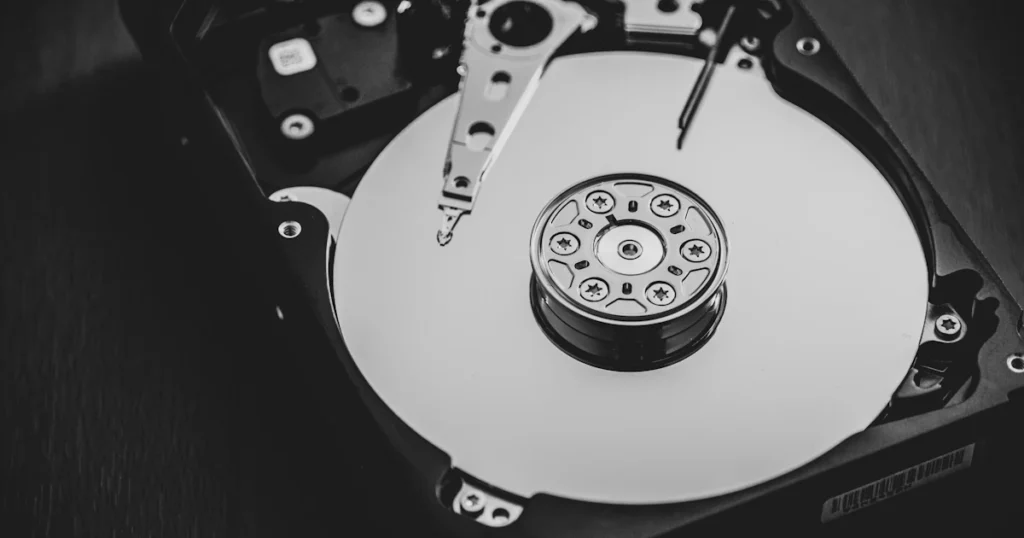
Photo by Denny Müller on Unsplash
Get our free weekly email: new tech guides and tools, no spam.
New and updated tech guides, a free tool worth bookmarking and one useful pick, once a week. No spam, unsubscribe anytime.
We will email you a link to confirm your subscription. See our privacy policy.





YOU ARE SO FAT IT IS
1000Brontobyte >1 fatsobyte
1000 fatsobyte >1 ultrafatsobyte
1000 ultrafatsobyte > 1 tristanbyte
1000 tristanbyte > 1 deepabyte
10000000000000000000000000000000000000000 deepabyte > 1 tristandeepalutomyuanbyte
YOU ARE SO FAT IT IS
1000Brontobyte >1 fatsobyte
1000 fatsobyte >1 ultrafatsobyte
1000 ultrafatsobyte > 1 tristanbyte
1000 tristanbyte > 1 deepabyte
10000000000000000000000000000000000000000 deepabyte > 1 lucabyte
Cool, I need to get a Brontobyte of RAM for my computer. Perhaps then, I won’t lag.
Actually Anil, the article is correct based on the fact that a consistent measurement increment has been clearly stated and used throughout the article.
However the Zottabyte should be a Yottabyte (yotta is derived from the Greek iota) as pointed out by Colin.
Once upon a time you would have been correct, Anil, however due to confusions, that became common during the early to mid ’90s in particular, between 1000 and 1024 it is now necessary to state a base derivative (i.e. 1000 bytes = 1 Kilobyte).
According to current accepted definitions of storage capacity the measurements in the article could be classified as the Metric storage measurements and what Anil are stated are binary measurements of a Kibibyte and a Mebibyte.
There can be a massive difference at the higher storage densities and those who deal with storage devices professionally have a habit of ensuring that definition of the base measurement (Kilobyte = 1000 or 1024 bytes) is provided before entering into negotiations/design/contracts/etc.
I’m just waiting for some bright spark to invent the Googolbyte 1000^100 bytes (or Googlebyte if a smart marketroid earns their pay for the month)…
what comes after exabyte(EB)?yottabyte or zettabyte(ZB)?…..i need to know
Is a megabyte bigger than a gigabyte?
Please reply.
1000 Megabytes equals 1 Gigabyte
so no, a gig is bigger
According to Wikipedia, “yottabyte” comes after “zettabyte,” not “Zottabyte.” Thus, we can still abbreviate without confusion:
– Zettabyte (ZB)
– Yottabyte (YB)
Thanks for your comment Anil. Indeed your data is more accurate. I have updated the post.
You are totally wrong
1024 bytes = 1 Kilo Bytes
1024 Kilo Bytes = 1 Mega Bytes
…..So on
http://anildigital.blogspot.com
If you follow the common practice of using say Kb=kilobyte Mb=Megabyte … etc … what happens when you get to a Zettabyte (Zb) and then a Zottabyte … is that also a Zb ??