Amazon Glacier Archival Storage: What Changed and S3 Glacier Today (2026)
When Amazon launched Glacier in August 2012, we covered it as remarkably cheap archival storage: about a cent per GB per month, or $1 to keep 100GB in the AWS cloud, with retrievals that took hours. Amazon Glacier has changed a lot since then. The original vault-based service is no longer accepting new customers, and archival storage now lives inside Amazon S3 as three Glacier storage classes. Here’s what Glacier was, what changed and how to use low-cost archival storage in 2026.
Quick answer: The original Amazon Glacier (standalone vaults) is closed to new customers, and AWS recommends the Amazon S3 Glacier storage classes instead. S3 Glacier Instant Retrieval returns data in milliseconds, S3 Glacier Flexible Retrieval in minutes to hours, and S3 Glacier Deep Archive within about 12 to 48 hours for the lowest-cost long-term storage. You upload to a normal S3 bucket and pick the class, or move data there automatically with lifecycle rules.
Table of Contents
What Amazon Glacier was in 2012
Glacier was designed for organizations that needed to keep large amounts of data for years, such as backups, records and media archives, without paying for fast access. Key features at launch:
- Very low storage prices compared with regular cloud storage, with no upfront payment and pay-as-you-go billing.
- Data stored redundantly across multiple facilities and encrypted.
- Retrieval jobs that took several hours, with only a small portion of your data free to retrieve each month.
- Unlimited capacity that scaled up or down as needed, replacing tape libraries for many companies.

At the time we were already using Amazon S3 with CloudFront as a CDN for our website files. The big difference was speed: S3 delivered files instantly, while Glacier queued downloads for hours. That trade-off still defines archival storage.
What changed: from Glacier vaults to S3 Glacier storage classes
Over the years AWS folded Glacier into Amazon S3. According to the Amazon Glacier developer guide, the original standalone vault-based service is no longer accepting new customers, and AWS recommends the S3 Glacier storage classes for low-cost, long-term archival storage, with S3 bucket APIs, availability in all AWS Regions and integration with other AWS services. Existing vault users can still access their data.
The three S3 Glacier storage classes
From the official Amazon S3 Glacier storage classes page:
- S3 Glacier Instant Retrieval: millisecond access for archives you rarely touch but need immediately when you do, such as medical images or media archives.
- S3 Glacier Flexible Retrieval: the closest to the original Glacier. Expedited retrievals typically take 1 to 5 minutes, standard 3 to 5 hours and free bulk retrievals 5 to 12 hours. Good for backups and disaster recovery.
- S3 Glacier Deep Archive: the lowest-cost option for data kept for many years, such as compliance records, with retrieval within 12 to 48 hours. AWS positions it as an alternative to tape.
Prices vary by Region and change over time, so check the Amazon S3 pricing page. Watch out for retrieval fees, minimum storage durations and per-request charges, which can matter more than the headline storage price.
How to use S3 Glacier in 2026
- Create an S3 bucket in the Amazon S3 console.
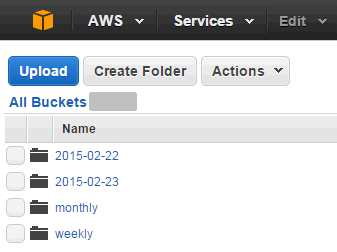
- Upload files and choose a Glacier storage class, or upload to S3 Standard first.
- Add a lifecycle rule to move objects to Glacier classes automatically after a set number of days.
- To read archived data from Flexible Retrieval or Deep Archive, start a restore request and download once it completes.
Many backup tools and NAS devices can send backups straight to S3 Glacier classes. For website backups, see our guide to back up your website to Amazon S3, and compare WordPress backup services.
Alternatives for archival storage
- Google Cloud Storage offers an Archive storage class for long-term backups.
- Azure Blob Storage has an Archive tier for rarely accessed data.
- Backblaze B2 is popular for simple, low-cost backups without archive-style retrieval delays.
FAQ
Is Amazon Glacier still available?
The original vault-based Glacier service no longer accepts new customers. Archival storage continues as the S3 Glacier storage classes.
What is the difference between S3 and S3 Glacier?
S3 Glacier classes are part of S3 but cost less to store data in exchange for slower or more expensive retrieval, and they have minimum storage durations.
Which Glacier class is cheapest?
S3 Glacier Deep Archive has the lowest storage cost but the slowest retrieval.
Is S3 Glacier good for personal backups?
It can be, for data you rarely need, but retrieval fees and delays make it less convenient than consumer backup services for everyday restores.
Stuck on a gift? Try our free Gift Idea GeneratorIdeas for anyone by age, job, interests and budget, with Amazon.com and Amazon.in linksFind gifts →Get our free weekly email: new tech guides and tools, no spam.
New and updated tech guides, a free tool worth bookmarking and one useful pick, once a week. No spam, unsubscribe anytime.
One email a week. Unsubscribe anytime. See our privacy policy.