
How to Make WordPress Faster and Safer: 13 Steps (2026)
How do you make WordPress faster and safer without spending days on it? The 80/20 rule applies: a handful of changes deliver most of the results. Guest author Mark first showed here how one caching plugin tripled his blog’s speed in a before-and-after test. Here are the steps that matter most to make WordPress faster and safer in 2026.
Quick answer: For speed, choose good hosting on a current PHP version, use a page caching plugin (LiteSpeed Cache on LiteSpeed hosts, WP Rocket or W3 Total Cache elsewhere), a CDN, compressed WebP images and a lightweight theme with few plugins. For safety, keep everything updated, use strong passwords with two-factor login, limit login attempts, add a firewall and take daily off-site backups.
Table of Contents
How to make WordPress faster
1. Start with good hosting
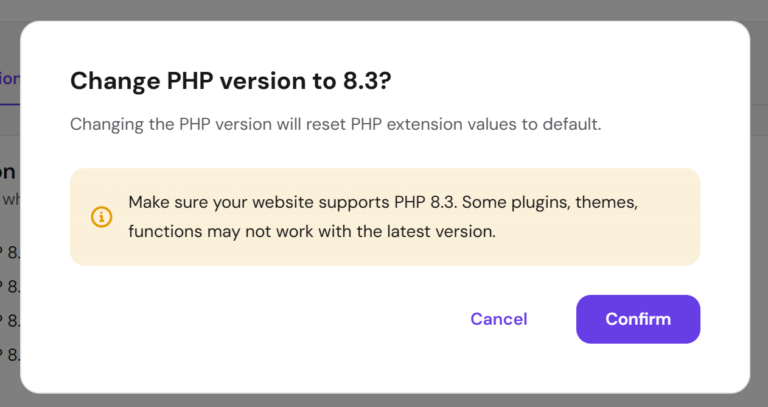
Hosting decides how fast your server answers. Look for SSD/NVMe storage, PHP 8.2 or newer, HTTP/3, server-level caching and data centres near your readers. Managed WordPress hosting and LiteSpeed-based hosts (such as Hostinger, which runs QuickOnlineTips) handle much of the tuning for you. If your site is on an older release, here’s how to upgrade your WordPress PHP version without breaking plugins.
2. Use a caching plugin
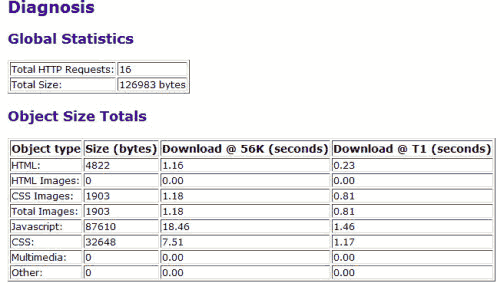
Caching serves ready-made pages instead of building each one from PHP and the database. In Mark’s 2010 test, W3 Total Cache made his blog about three times faster, while another plugin made little difference, which shows why you should measure. Good options today:
- LiteSpeed Cache: free and the best choice on LiteSpeed servers.
- WP Rocket: paid and very easy to set up.
- W3 Total Cache and WP Super Cache: free alternatives.
3. Add a CDN and browser caching
A CDN such as Cloudflare serves images and files from servers near each visitor. Long cache headers let repeat visitors skip downloads; here’s how to leverage browser caching.
4. Optimise images
Resize, compress and serve WebP or AVIF, and lazy load images below the fold. See our guide to optimizing images.
5. Use a lightweight theme and fewer plugins
Fast themes like Kadence, GeneratePress or Astra, and only the plugins you really need. Remove page builders and sliders you don’t use.
6. Clean the database
Delete old revisions, spam and transients. Here’s how to optimize your WordPress database.
7. Measure before and after
Test with PageSpeed Insights before and after each change, as Mark did, so you keep only what helps.
How to make WordPress safer
- Update WordPress core, themes and plugins; turn on auto-updates for trusted plugins.
- Never use “admin” as a username, and use long unique passwords.
- Add two-factor authentication for all admins.
- Limit login attempts and add a firewall (Wordfence or Cloudflare).
- Keep your own computer free of malware and keyloggers.
- Take daily off-site backups; here’s how to schedule a daily database backup.
The official Hardening WordPress guide covers the basics well. For our full checklist, read how to increase WordPress security and our pick of the best WordPress security plugins.
FAQ
Which caching plugin is best?
LiteSpeed Cache if your host runs LiteSpeed; WP Rocket for the easiest setup elsewhere. Use only one caching plugin.
Do security plugins slow WordPress down?
Plugin firewalls add some load. A cloud firewall such as Cloudflare protects without slowing your server.
How fast should a WordPress site load?
Aim for Largest Contentful Paint under 2.5 seconds on mobile.
Originally written by guest author Mark of MixTheNet, a site helping everyday users get more from the web. Updated for 2026 by QuickOnlineTips.
Stuck on a gift? Try our free Gift Idea GeneratorIdeas for anyone by age, job, interests and budget, with Amazon.com and Amazon.in linksFind gifts →Get our free weekly email: new tech guides and tools, no spam.
New and updated tech guides, a free tool worth bookmarking and one useful pick, once a week. No spam, unsubscribe anytime.
One email a week. Unsubscribe anytime. See our privacy policy.




why wp-super cache is still in the featured plugins wordpress.org?
I use plugin called wp-db-backup to make me scheduled backups of my sites.
Making backups is very good idea. I use plugin called wp-db-backup to make me scheduled backups of my sites. What I like about this plugin is that you can get backup in your inbox. Regular updating wordpress and plugins is also very important.
Hmm that thange admin link does not come up with a simple plugin. To share you mine: https://wordpress.org/plugins/admin-renamer-extended/
Nice share . Quite descriptive with the test results you have give . I am going to retweet this. Very helpful
can i place google ads on wordpress blog??are google ads useful to make money on word press blog??plz advice
I also use hostgator last 15 days. Very good hosting service provider. But wp super cache create problem for me.
I DID learn a lot. For example, I had no idea Hostgator is a reseller – thought they own their servers…
Now honestly – what do you think about THIS* Web Host? I’ve heard some good stuff about them, though they’re quite new…
Thanks for the info, straight to the point :)
BBB really is a poor way to judge ANY business. First they get their income from business, they have no capabilities to investigate, and any complaints are given to the business to respond, allowing for fabrications.
I have four WordPress blogs with BlueHost.com and have been very satisfied with uptime and support. Wait time is usually less than a couple minutes, and whomever answers the phone stays with the problem until solved.
Is this the rule or the exception? Do you have any proof for this? In my experience, judging by 5-6 companies BBB has been almost flawless in helping me avoid a bad company.
I have friend who had nightmares with BlueHost. About the support, same is with Hostgator, most businesses handle this part well.
He’s right – here’s a simple statistically based example – look at the complaints tracked by the BBB themselves. One of the hosts recommended on your list (I won’t say which one) had an A+ rating but a rate of almost a complaint a day against them filed with the BBB. A different company – not accredited by the BBB who I rate higher than the one you listed with an A+ grade – was listed as a D by the BBB. But has a complaint rate 1/6th the size of the A+ rated company. I know company size has something to do with it but all the same. A complaint a day that was severe enough to make the complaint to the BBB and you STILL get an A+ rating!!!!!
The grade is based on whether you solve the complaint.
Yeah company size has to do with it, however the grade depends on ultimately how the companies satisfied BBB i.e. how well it satisfied people who complain to the BBB about the company.
Hosting plays a major role in optimization of WordPress.. though fact is wordpress is already very resource hungry. I will suggest run it on ngnix instead of apache.. That will create a major difference…