
Extra Large Ads: The 2009 Big Ad Formats and Large Ad Sizes Today
In 2009 top news sites started running extra large ads that dwarfed the usual 728×90 and 160×600 banners. I spotted a huge Mercedes ad on the New York Times website. This article looks at those big ad formats, what happened to them, and which large ad sizes publishers use today.
Quick answer: In 2009 the Online Publishers Association introduced three large ad units: the Fixed Panel, the XXL Box and the Pushdown. Big brand ads still exist, but today’s large formats are standard sizes like 970×250 billboards and 300×600 half-page ads. The Better Ads Standards discourage the most intrusive formats, such as large sticky ads and pop-ups.
Table of Contents
The 2009 extra large ads
As readers kept searching for content between the ads, top publishers decided to give advertisers bigger, bolder spaces. The Online Publishers Association (OPA) announced that members whose sites reached 68% of the US internet audience had begun offering three new ad units:
- The Fixed Panel: 336 wide x 700 tall, stayed in view as the reader scrolled up and down the page.
- The XXL Box: 468 wide x 648 tall, which opened for seven seconds to 936 x 648.
- The Pushdown: 970 wide x 418 tall, which rolled up after seven seconds to 970 x 66.
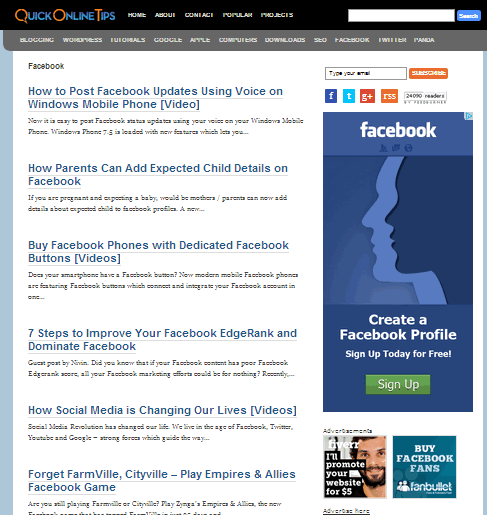
Here is the huge Mercedes ad I spotted on the New York Times:

Early advertisers using the OPA units included Bank of America, Cleveland Clinic, Frito-Lay and Mercedes-Benz. Publishers offering them, then or soon after, included CNN.com, The New York Times, ESPN, Forbes.com, The Wall Street Journal Digital Network, The Washington Post, USA Today and Weather.com.
Why brands liked bigger ads
Bigger ads give better visibility and more brand presence. For CPM advertisers, who pay per thousand impressions, a bigger ad gets more out of each view. Large spaces on top sites were expensive, so only big brands could afford them, and they usually came with high-quality design. I expected ads to keep getting bigger, though even these were better than full-page ads.
Extra large ads today
Big ads did not disappear, but they have settled into standard sizes, and the most annoying formats are now discouraged:
- Billboard (970×250) and large leaderboard (970×90): wide units at the top of desktop pages. See where the 970×90 large leaderboard works best.
- Half page (300×600): a tall sidebar unit. Read our 300×600 large skyscraper results.
- Responsive ads: most publishers now let the ad network fit the ad to the space. See how AdSense responsive ads work.
- Auto formats: AdSense Auto ads can add anchor, vignette and side rail ads automatically.
The Better Ads Standards
The Coalition for Better Ads (external site) publishes standards listing ad experiences people find most annoying. On desktop these include pop-up ads, auto-playing video ads with sound, prestitial ads with a countdown and large sticky ads. Google Chrome began filtering ads on sites that repeatedly failed these standards in 2018, so publishers have good reason to avoid them.
FAQ
What is a pushdown ad?
A large ad at the top of a page that opens to show the full ad, then shrinks to a slim banner, pushing the page content down rather than covering it.
What is the largest standard display ad size?
On desktop, the 970×250 billboard and the 300×600 half page are among the largest common sizes.
Are large sticky ads allowed?
Large sticky ads are listed in the Better Ads Standards as a format to avoid. Smaller sticky units, like anchor ads, are common.
Do bigger ads earn more?
Often, because they get more attention and more advertisers bid on them, but too many big ads hurt the reader experience and can cost you visitors.
Stuck on a gift? Try our free Gift Idea GeneratorIdeas for anyone by age, job, interests and budget, with Amazon.com and Amazon.in linksFind gifts →Get our free weekly email: new tech guides and tools, no spam.
New and updated tech guides, a free tool worth bookmarking and one useful pick, once a week. No spam, unsubscribe anytime.
One email a week. Unsubscribe anytime. See our privacy policy.



936 x 648 is nothing. My advert is way bigger than that.
Most of these ads require user interaction. This means that the initial banner that loads to the page will only be in the 30-80k range. Once a user interacts with the banner the rest of the content is loaded. Because of this the load time to the page should not be effected. This does not mean that the Flash file wouldn’t slow down your browser. We all know that Flash can be a CPU hog.
All that aside, I really dislike the large banners as well.
JL
Large banner is eyecatching and maybe get more attention from readers but it is not good for small publishers as it increases loading time and decrease space for contents
The larger banner will increase the time of page loading and for me it’s not working whatever how large the ad it is if you have no interesting on it.
1. I never click on ads. If I visit the New York Times website or one of the others you mentioned, I am looking for news and articles and nothing else.
2. If a site has too many ads, and especially too many animated or Flash ads, I often stop visiting that site.
Advertisers should take note. There are many more internet users like me who are fed up with seeing websites cluttered with ads. If I want to look at really big ads, I’ll go stand in front of a billboard for an hour. Online, I can manage quite well without them, thanks very much.