Job Scams: How to Spot a Fake Job Offer (Task Scams, Text and WhatsApp Recruiters) and What to Do If You Paid
A job scam is a fake job offer built to take your money or your personal details. It usually arrives as a friendly text, WhatsApp or Telegram message about easy remote work, then ends with you paying a “deposit”, sending back money from a check that bounces, or handing over your ID and bank details. FTC data showed reports of one type alone, “task” job scams, jumping from about 5,000 in all of 2023 to about 20,000 in just the first half of 2024, and fraud alerts this holiday season keep warning about fake “guaranteed daily income” offers spread through social media ads.

This guide shows how the common job scams work, the red flags that give a fake job offer away, how to check that a recruiter and company are real, and exactly what to do if you already paid or shared your details, in the US and in India.
Quick answer:
- Never pay to get a job or to get paid. Any request for money, crypto or gift cards for training, equipment, “unlocking tasks” or withdrawing earnings means it is a scam.
- Ignore unexpected job texts, WhatsApp and Telegram messages. Real employers don’t recruit by random message, and they don’t pay you to like videos or post ratings.
- Never send back money from a check you were sent. It will bounce and you will owe your bank the full amount.
- Already paid? Call your bank or payment app right away and ask for a reversal, then report it: US at ReportFraud.ftc.gov and ic3.gov; India on 1930 or cybercrime.gov.in.
Table of Contents
Common job scams at a glance
| Scam | How it starts | The catch |
|---|---|---|
| Task scam (“optimization”, “product boosting”) | Text, WhatsApp or Telegram message about simple online work | Small early payouts, then you must deposit your own money (often crypto) to unlock “earnings” you can never withdraw |
| Fake recruiter | Message or email claiming to hire for a well-known company | Asks for your ID documents and bank account before any real interview |
| Fake check scam | Remote job, virtual assistant, nanny or caregiver offer | You deposit a check, send part of it on, and the check bounces |
| Reshipping scam | Work-from-home offer to receive and re-mail parcels | Reshipping goods is never a real job |
| Upfront-fee scam | Job placement agency, training, certification or “starter kit” | You pay a fee for a job that doesn’t exist |
| Government or postal job scam | Ad promising a federal, postal or government job | You pay for a “guaranteed” job that never comes |
How job scams work
Most job scams follow the same script. They reach you first, they make the job sound easy and well paid, and they get you to take one small step (reply “YES”, join a group chat, install an app) before asking for money or information. Here are the versions you are most likely to meet.
Task scams: paid to like, rate or “optimize”
A task scam pays you for fake online work, then makes you pay. A stranger messages you about online work such as rating products, liking videos or “boosting” apps. You complete simple tasks in an app or website that shows your commissions growing, and you may even get a small real payout (the FTC says usually $5 to $20) to win your trust.
Then the twist: to unlock the next set of tasks or to withdraw your “earnings”, you are told to deposit your own money, usually in cryptocurrency. The balance on the screen is fake. Every deposit leads to a bigger one, and you can’t withdraw anything. If you hesitate, you may be added to a group chat full of “co-workers” posting screenshots of their big earnings. In India the same trick is sold as a part-time job; the government has blocked over 100 websites tied to these task-based part-time job frauds, which lure people through online ads and then move the chat to WhatsApp or Telegram.
Fake recruiter texts and WhatsApp messages
Job scam texts often name a well-known company, mention a daily or weekly pay figure, and give no real job details. Instead of a link, many simply ask you to reply “YES” or “INTERESTED”. Don’t reply, however professional the graphics or the message look.
Fake recruiters also move unusually fast: an offer and “paperwork” arrive before any real interview, along with a request for your driver’s license, Social Security number or bank account “for direct deposit”. Real employers don’t ask for that before they have actually interviewed and hired you.
Work-from-home and remote job scams
Remote job scams promise high pay for little work. Some sell you a starter kit, training or a certificate you supposedly need. Others are fake check scams: you are sent a check, often described as an “overpayment” or money for supplies, and asked to send part of it on to someone else. The check later bounces, and the bank takes the full amount back from your account. The FTC is blunt about this: no honest employer will send you a check and ask you to send money or buy gift cards with it.
Reshipping, reselling and mystery shopper scams
Reshipping jobs ask you to receive packages at home, repackage them and mail them on, often overseas. Reshipping goods is never a real job. Reselling scams ask you to buy goods to sell on, and the goods never arrive or are junk. Mystery shopper scams charge you for “certification” or a job directory.
Job scams on LinkedIn, Indeed and other job sites
Scammers also post fake listings on real job boards and social networks, or copy the name and logo of a real company. A listing on a trusted site is not proof that the job is real. The same red flags apply: a vague job, pay that is too good, a move to WhatsApp or Telegram, an email from a free account, or any request for money or ID before a real interview.
12 red flags of a fake job offer
- They contacted you first, out of the blue, by text, WhatsApp, Telegram or social media, for a job you never applied for.
- They ask you to pay for anything: training, equipment, a “registration fee”, a deposit to unlock tasks, or a fee to withdraw your earnings.
- Pay is high and the work is trivial: liking videos, rating products, “optimizing” apps, a few minutes a day.
- Payments in crypto or gift cards, or to a personal account or UPI ID with a random name.
- A check arrives and you are asked to send part of it back or pass it to a vendor.
- No real interview, or the “interview” is only a few chat messages before an instant offer.
- They want your ID and bank details early, before any interview or written offer.
- Free email or a personal number: a big company’s recruiter writing from a free email account or a personal mobile.
- Vague job details: no clear job title, team, address or manager, just pay figures.
- Pressure and urgency: you must reply, pay or finish a set of tasks today.
- Group chats with too-good stories: strangers posting screenshots of daily earnings.
- “Guaranteed” income or placement, including promised government or postal jobs for a fee.
How to check if a job offer is real
Before you share anything or pay anything, take ten minutes to check.
- Find the job yourself. Go to the company’s own website (type the address, don’t use the link in the message) and look for the role on its careers page. If it isn’t there, contact the company through the phone number or email on its official site and ask.
- Check the email address. Real recruiters generally email from the company’s own domain, not a free webmail account.
- Search for complaints. Search the company or recruiter name plus words like “scam”, “review” or “complaint” and see what others report.
- Insist on a real interview and a written offer that names the employer, role, pay and address before you give any personal details.
- Talk it through with someone you trust. Scammers rely on speed and secrecy; a second opinion breaks the spell.
- Never pay, and never deposit a check and send money on. If either comes up, stop.
Remote work does exist, and there are legitimate apps for side income; our list of legit apps to make money explains how each real one pays and what the catch is.
What to do if you paid a job scammer
Act fast: the sooner you call, the better the chance of stopping or reversing the payment. First, stop all contact and don’t send any more money, whatever they promise. Then contact whoever you paid through.
If you paid by card, bank transfer or a payment app
- Credit or debit card: call your card issuer using the number on the back of the card, report the charge as fraud and ask for a refund.
- Bank transfer: call your bank right away and ask it to reverse the transfer.
- Payment app or UPI: report the payment inside the app and to your bank, and ask for a reversal. In India, call 1930 at once (see below).
- Wire transfer company: report it to the company immediately, say a scammer tricked you, and ask for a refund.
- Gift card: contact the card’s issuer using the number on the back, explain that a scammer has the card number and PIN, ask for a refund, and keep the card and receipt.
- Cryptocurrency: contact the exchange or crypto ATM operator straight away, tell them the transaction was fraudulent and ask them to reverse it. Crypto has fewer protections, so recovery is hard.
If a check was involved, tell your bank. Expect the bank to take back the full amount of the fake check, so don’t spend or forward that money.
If you shared your ID or bank details
- US: if your Social Security number was used, report it at IdentityTheft.gov (external site, opens in new tab) for a recovery plan. If you are not sure it was used, the same site has steps to protect yourself. A credit freeze blocks new accounts in your name; our guide on how to protect yourself from identity theft walks through it.
- India: tell your bank, change your net banking and UPI PINs and passwords, and report the fraud on 1930 or cybercrime.gov.in.
- Everywhere: change any password you shared, turn on two-factor authentication, and watch your bank and card statements closely for a few months.
If you installed an app or opened a file they sent
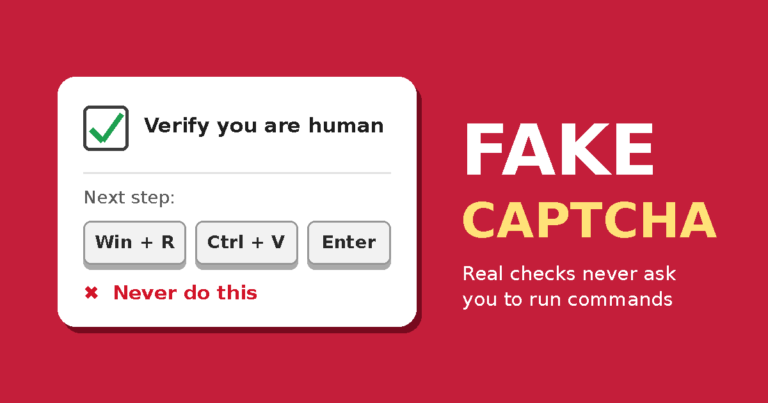
Some job scam messages push you to download a file or install an app. If you did, uninstall it, don’t enter banking details on that device until it is checked, and change your important passwords from a different, clean device. Scams that start with a remote-control app or a pasted command are covered in our guide to the fake CAPTCHA scam.
How to report a job scam
In the US
- FTC: report it at ReportFraud.ftc.gov (external site, opens in new tab). Its job scams page (external site, opens in new tab) has more examples. You can also report to your state attorney general.
- FBI: report online fraud, especially crypto losses, to the Internet Crime Complaint Center at ic3.gov (external site, opens in new tab), with your transaction details.
- The platform: report the profile or listing on the job site or social network where you found it, and report the number in WhatsApp or Telegram.
In India
- Lost money: call the cyber crime helpline 1930 straight away, and file a complaint on the National Cyber Crime Reporting Portal at cybercrime.gov.in (external site, opens in new tab). Report the phone numbers and social media handles the fraudsters used.
- Suspicious message, no money lost: report the call, SMS or WhatsApp message through Chakshu on Sanchar Saathi (external site, opens in new tab) (website or app).
- Check before you pay: when any UPI payment shows a random person’s name instead of the company you expect, stop. It may be a mule account.
Where to look for safe jobs
- Company careers pages: the most reliable source for any employer you already know.
- US government jobs: federal jobs are listed free on USAJOBS (external site, opens in new tab). Never pay anyone who promises a federal or postal job.
- Job search help: CareerOneStop (external site, opens in new tab) has job listings and job search help.
- Big job boards and LinkedIn: useful, but check every listing with the steps above, because scammers post there too.
Scammers also use AI tools to make their messages, profiles and calls look more convincing; our guide to AI scams shows how to spot them.
FAQ
What is a job scam?
A job scam is a fake job offer or listing used to steal money or personal information. The “job” might be online tasks, a remote role, reshipping parcels or a placement service, but it ends with you paying money or handing over ID and bank details.
What is the WhatsApp job scam?
It is usually a task scam: a stranger messages you on WhatsApp or Telegram offering money for liking videos, rating products or similar tasks. You get small payouts at first, then you are asked to deposit your own money to unlock bigger earnings that you can never withdraw.
Can jobs on Indeed or LinkedIn be scams?
Yes. Scammers post fake listings and pose as recruiters on real job sites. Check that the job appears on the company’s own careers page, that the recruiter uses a company email, and never pay or share ID before a real interview.
How do I know if a job offer is legit?
A real offer follows a real interview, names the employer, role, pay and address in writing, comes from the company’s own email domain, and never asks you to pay, pass on money from a check they sent, or deposit money to get paid.
Can I get my money back from a job scam?
Sometimes, if you act fast. Call your bank, card issuer or payment app immediately and ask for a reversal, then report the scam (ReportFraud.ftc.gov and ic3.gov in the US; 1930 and cybercrime.gov.in in India). Crypto and gift card payments are much harder to recover. Be wary of anyone who offers to recover your lost money for a fee: that is often a second scam.
Subscribe to our weekly tech newsletter
Free: 100 Tech Terms ebook (worth $2.99)
Unsubscribe anytime. Privacy