What Is Temple? Deepinder Goyal’s Brain Wearable Explained
Temple is a small wearable that sticks to the side of your forehead, at the temple, instead of sitting on your wrist. The Temple device is made by Temple, a health-tech company founded by Zomato founder Deepinder Goyal, and the company says it tracks signals linked to blood flow to the brain and how hard your body is working through the day.
The device keeps turning up in the news and on social media as the company moves from a small early-access group to pre-orders, so many people are seeing the name for the first time. This explainer sets out what Temple is and what its maker says it is trying to do, in plain words.

Quick answer: Temple is a head-worn wearable from Deepinder Goyal’s company, Temple. It attaches near the temple with an adhesive grip and, according to the company, reads signals related to brain blood flow and the body’s workload, which it shows in a phone app. The company says it is not a medical device. Pre-orders are taken through its official website and app; reports put the first batch at ₹85,000, with a lifetime supply of grips and lifetime app access included.
Table of Contents
What is the Temple device?
Temple is a wellness wearable, in the same broad family as fitness bands, smartwatches and smart rings, but worn in a different place. Where those devices sit on the wrist or finger, Temple sits on the side of the head, next to the eye, on the flat area doctors and the rest of us call the temple. That spot gave the product its name.
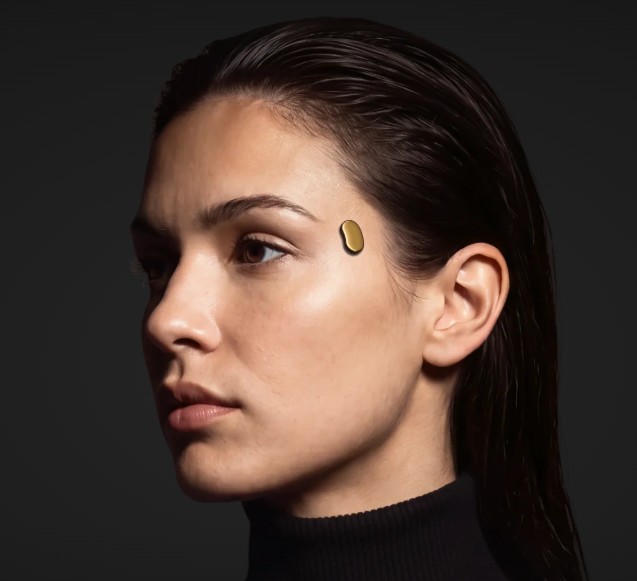
It pairs with a Temple app on your phone, where the readings are shown. The company presents it as a device for long-term health and performance rather than for counting steps or showing notifications.
Who makes Temple?
Temple is developed by Temple, a health-tech company founded by Deepinder Goyal, best known as the founder of food delivery app Zomato. Goyal has shared most of the product news himself, including prototypes, early-access openings and pre-order announcements, on his X account and in interviews. The company’s official site is temple.com (external site, opens in new tab).
Where is Temple worn, and why there?
Temple attaches to the skin near the temple using disposable adhesive patches the company calls grips. Reports quoting the company say the grips are meant to stay on during daily activity and exercise and are replaced every few days.
The company’s reason for the location is that the skin at the temple is thin, sits close to blood vessels that supply the head, and moves less than a wrist. It says this lets the device take cleaner readings than a wrist-worn tracker could take of the same signals.
What does Temple measure, according to the company?
Temple describes its readings with its own names rather than standard medical terms:
- BrainFlow: the company describes this as a measure that stands in for blood flow to the brain, read continuously from the temple using optical sensors. It says BrainFlow shows how that flow changes with exercise, sleep, posture, meditation and other everyday activities.
- Entropy: the company’s own score for how hard the body is working. Goyal has described it as a real-time measure of the body’s “cost of being alive”, and the official site frames it around how hard the body works to shed heat, at rest and during activity.
- Everyday signals: Goyal has said heart rate is “just one of the simpler things” Temple measures.
These are the company’s descriptions. Its own published material says the device’s accuracy is not intended to match professional medical or scientific instruments.
What is the company trying to do with Temple?
According to the company, the aim is to give people a continuous view of how their daily habits, such as training, sleep, work and stress, affect blood flow to the brain and the load on the body, so they can notice patterns and adjust their routines. Goyal has linked the idea to his own research interest in ageing, which he calls the “Gravity Ageing Hypothesis”; the company presents this as a hypothesis it is exploring, not as an established finding.
The company has said it ran early validation studies comparing Temple’s readings with lab instruments, and it opened a limited early-access programme mainly, in Goyal’s words, to gather feedback to shape the product.
Is Temple a medical device?
No. Temple’s own terms say it is not a medical device and should not replace a professional medical assessment. It is sold as a wellness and performance wearable. If you have a health concern, a doctor, not a consumer gadget, is the right first step.
Can you buy Temple?
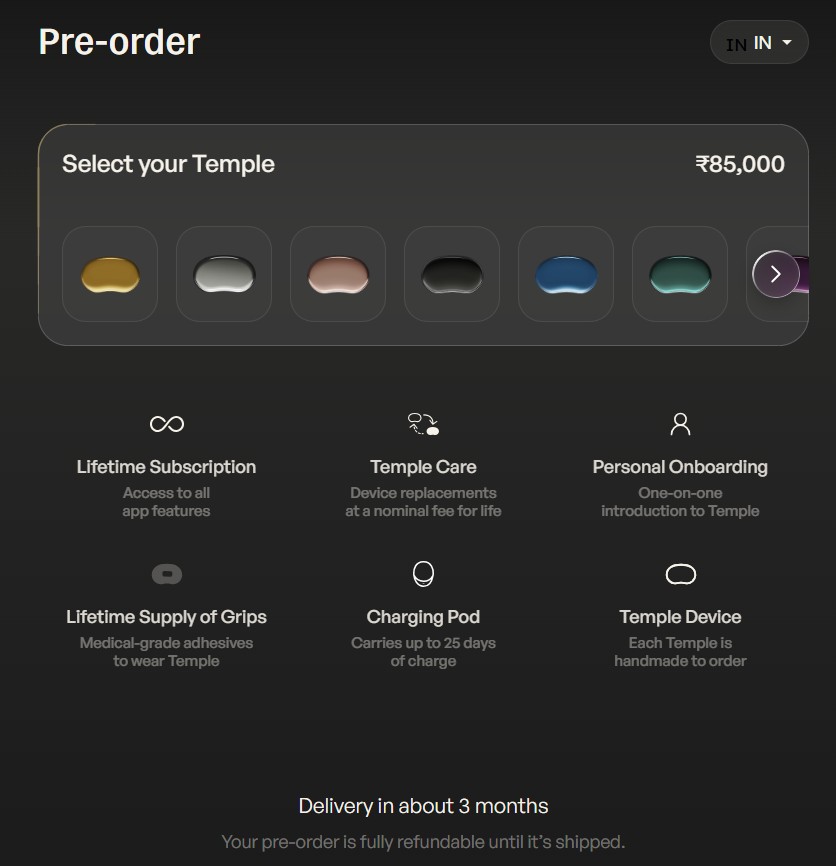
Temple started with a small early-access group, then opened pre-orders. Goyal said the company was first taking pre-orders from people who had signed up for early access, and the official website now shows a pre-order button. The official website does not list a price. Reports on the first batch’s pre-order terms (Temple Batch 01, opened in early November 2026) put the price at ₹85,000 in India, paid once, with no monthly subscription on top. The pre-order is reported to include:
- the Temple wearable and its charging pod
- a lifetime supply of the adhesive grips
- lifetime access to the Temple app and its readings
- a personal onboarding session
- Temple Care, which covers replacement devices for a small service fee
That lifetime bundle is the main difference from many health wearables, which charge a monthly membership on top of the device. Goyal has said each device is made to order and should arrive within about three months of ordering, so a pre-order placed now is likely to arrive in early 2027. The company has not published the full terms on its website, so confirm the price, what is included and the refund terms in the Temple app before you pay.
Temple is sold through its own website and app, not through regular retail listings, so be careful with look-alike sellers or social media ads that claim to sell it.
How is Temple different from a smartwatch or fitness band?
| Temple | Smartwatch or fitness band | |
|---|---|---|
| Where it is worn | Side of the head, on an adhesive grip | Wrist |
| Main focus (as described by the maker) | Brain blood flow signals and body workload | Steps, heart rate, sleep, workouts, notifications |
| Screen | No, readings are shown in the app | Usually yes |
| Where to buy | Company website | Shops and online stores |
Curious how wrist trackers started? Our Mi Band unboxing looks back at one of the first cheap fitness bands. For wearables you can pick up today, see our list of the best tech gifts.
FAQ
What is the Temple device used for?
The company says Temple tracks signals related to blood flow to the brain and how hard the body is working, so wearers can see how habits like exercise, sleep and stress affect those readings over time.
Who invented the Temple device?
Temple is made by Temple, a company founded by Deepinder Goyal, the founder of Zomato.
How does Temple stay on the head?
It attaches to the skin near the temple with a disposable adhesive grip, which the company says is replaced every few days.
How much does Temple cost?
The official website does not show a price. Reports on the first pre-order batch put it at ₹85,000 in India as a one-time payment, including the charging pod, a lifetime supply of grips and lifetime app access, with no monthly subscription. Check the Temple app for the current price before you order.
Is Temple available in India?
Temple was founded in India and takes pre-orders on its official website. Check temple.com for current availability, price and delivery times in your country.
Is Temple approved as a medical device?
No. The company states that Temple is not a medical device and should not replace professional medical advice.
Subscribe to our weekly tech newsletter
🎁 Free 100 Tech Terms ebook when you subscribe. Unsubscribe anytime. Privacy