
Google Meaning: What Does Google Mean? (Googol, 1 Followed by 100 Zeros)
Google meaning: what does the name Google mean, and where did the name come from? Google’s name comes from googol, the mathematical term for 1 followed by 100 zeros. The founders chose it to reflect their mission to organise the huge amount of information on the web, and a famous spelling mistake gave us “Google” instead. Here’s the full story of the Google meaning, what a googol is, and how Google became a verb.
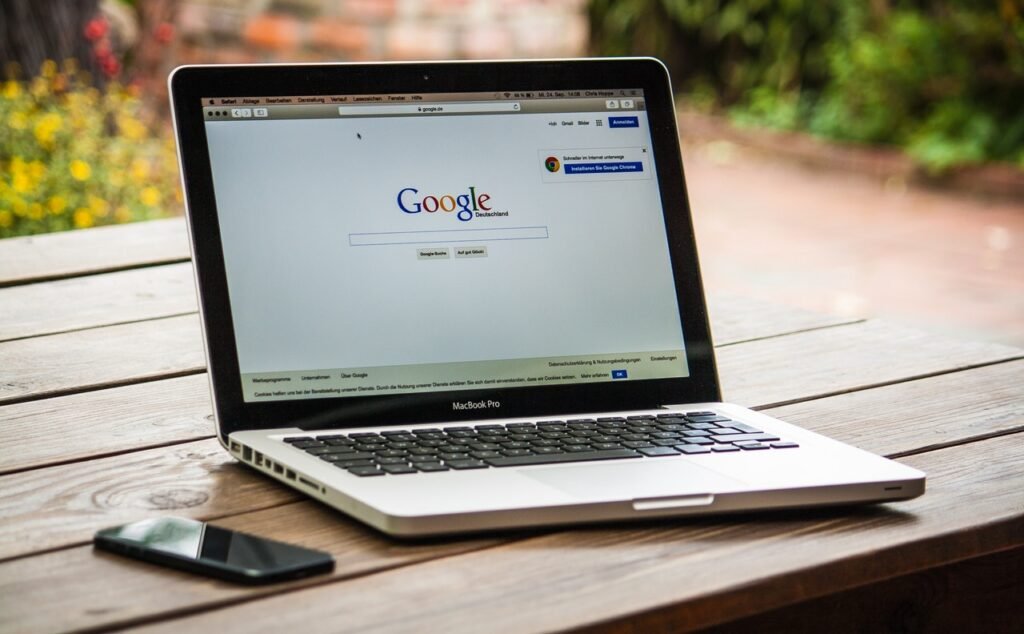
Quick answer: Google is a play on googol, the number 10100 (1 followed by 100 zeros). It stands for the vast amount of information Google wanted to organise. “Google” isn’t an acronym, so it doesn’t stand for anything else.
Table of Contents
Googol meaning: 1 followed by 100 zeros
A googol is 10100, written out as:
10,000,000,000,000,000,000,000,000,000,000,000,000,000,000,000,000,000,000,000,000,000,000,000,000,000,000,000,000,000,000,000,000,000,000
Yes, that’s 100 zeros. The name was coined in 1920 by nine-year-old Milton Sirotta, nephew of the American mathematician Edward Kasner. Kasner asked his nephews to suggest a name for a huge number, and Milton came up with “googol”. Kasner popularised it in his 1940 book Mathematics and the Imagination, written with James Newman.
A googol is larger than the estimated number of atoms in the observable universe, which is around 1080. An even bigger number, the googolplex, is 10 to the power of a googol. Google’s headquarters in Mountain View, the Googleplex, is named after it.
Google meaning: how Google got its name
Larry Page and Sergey Brin started their search engine at Stanford University in 1996 under the name BackRub, because it analysed backlinks to rank pages. In 1997 they wanted a name that showed the scale of what they were indexing, and googol was suggested.
According to the popular story, when fellow student Sean Anderson checked whether the domain was available, he typed google.com instead of googol.com. Page liked the misspelling, and the domain google.com was registered on 15 September 1997. Google Inc. was founded in September 1998. Google’s own Our Story page tells more of its history.
Google’s mission
Google’s mission is “to organize the world’s information and make it universally accessible and useful”. The googol name reflects that goal of handling a seemingly infinite amount of information. Since 2015, Google has been part of the parent company Alphabet (named partly as a play on “alpha bet”), as we covered when Google became part of Alphabet.
Google dictionary definition: google as a verb
Google became so popular that its name turned into a verb. In 2006, both the Oxford English Dictionary and Merriam-Webster added “google”, meaning to search for information about someone or something on the internet, usually with the Google search engine. People now say “just google it” rather than “search for it”, whether they’re looking for facts, images or directions.
Fun facts about Google and googol
- Google’s first logo, in 1998, had an exclamation mark, like Yahoo!.
- Gmail launched on 1 April 2004 and many people thought it was an April Fools’ joke.
- “Googol” is often misspelled as “google”, and the reverse happens too.
- Google handles billions of searches every day, still far short of a googol.
- Google’s 404 and error pages once featured a broken robot, and its Easter eggs, like “do a barrel roll”, are still hidden in search.
Frequently asked questions
What does Google stand for?
Google doesn’t stand for anything. It isn’t an acronym. The name comes from googol, the number 1 followed by 100 zeros.
Who invented the word googol?
Nine-year-old Milton Sirotta came up with it in 1920, and his uncle, mathematician Edward Kasner, made it popular.
Is a googol bigger than infinity?
No. A googol is a finite number, however huge. Infinity isn’t a number at all, and even a googolplex is finite.
Get our free weekly email: new tech guides and tools, no spam.
New and updated tech guides, a free tool worth bookmarking and one useful pick, once a week. No spam, unsubscribe anytime.
One email a week. Unsubscribe anytime. See our privacy policy.

The word Google is made up of ‘G’ + ‘oogle’
The first ‘G’ is the Masonic ‘G’.
The ‘oo’ is a representation of the Vesica Pisces, another Masonic symbol.
‘oo’ is homophonous with the “U’ sound in English.
UGLE means “United Grand Lodge of England’
GOOGLE – Global Organization of Oriented Group Language of Earth
Google looked so simple and obvious yet not quite so. Am now a little wiser.
itz a greatest invention, whose r create or discovered it… and now eventually i knew the genuine meaning.A big thanx to the team of GOOGLE
That meanings not to cleared..what followed by 1 to hundred..
It is like GO ‘OGLE’
Meaning name of Google ?
I’ve heard a lot of different explanations for the word google, but I finally figured it out. google expanded has 100 zeros, which represents the top categories that people research. i think one of the most popular is just for games or research on wikipedia. ps, who created google?
Googol is in latin, not english. If you then translate “Googol” into english, it becomes GOOGLE!
Thanks for telling the meaning of google.Its very interesting and useful for students.
Offcourse there is no doubt that googel is the perfect search engine website of the world, but if we talk about is meaning so i felt a slight difference in the sill of GOOGOL and GOOGEL. so i will want to know that is it a countable aspect to talk about are not?
Best regards.
googol=100 zeros it is dirived from latin lang
google is in english
if we have to say 100 its better to say googol
yankis
the name of the site is gogle instead of being googol
Google mean 10 to the power 100. This name match to this site
wonderful.its a new information for me.Being a maths teacher Iwas not aware of this.Thanks for this.
The founders of Google decided that Google looks better than googol according to a documentary I saw on TV.
why is GOOGOL changed as GOOGLE?
I want to know what is the relation between 100 zeroes and google.please give me answer.
Thanks
i want to know the exact meaning of google
i want to know the exact meaning of google
Hi,, every one Googol has the meaning of 10^100, but there is no meaning for Google..
reply me if u have the meaning for Google,,,
googling is search it on google
google means 10^100
google=10 to the power 100
This is the very essential answer for me and my colleagues.
Some persons pronounced gooooglee.
Thanks for your site…I was just searching for how ‘Googol’ was really spelled. I’d been meaning to look it up for over a zillion years now and have just had gotten around to doing it!! Now, I must go and find the origins of the ‘Powers of 10’ from IBM. Back to the past and on into the future… so long, SuperMarc
google is a more english and pronunciable word from googol (1 follow by 100 zeros)